

Communities and behavioral health facilities play crucial roles in promoting mental health and well-being. Synergy between the two is essential to create a comprehensive and effective mental health support system. By working together, communities and behavioral health facilities can address the diverse needs of individuals, promote mental health, reduce the stigma often associated with behavioral health and contribute to the overall well-being of a community.
Because of the cost and potentially longer approval process for new developments, many entities have turned to the adaptive reuse of non-healthcare buildings to fulfill community behavioral healthcare needs. This approach not only hits on the growing need to address an ongoing behavioral health crisis in various communities but also contributes to sustainable development by utilizing existing resources. The growing emphasis on adaptive reuse is seen across industries, including the office market.
Case Study: Behavioral Health Adaptive Reuse in Massachusetts

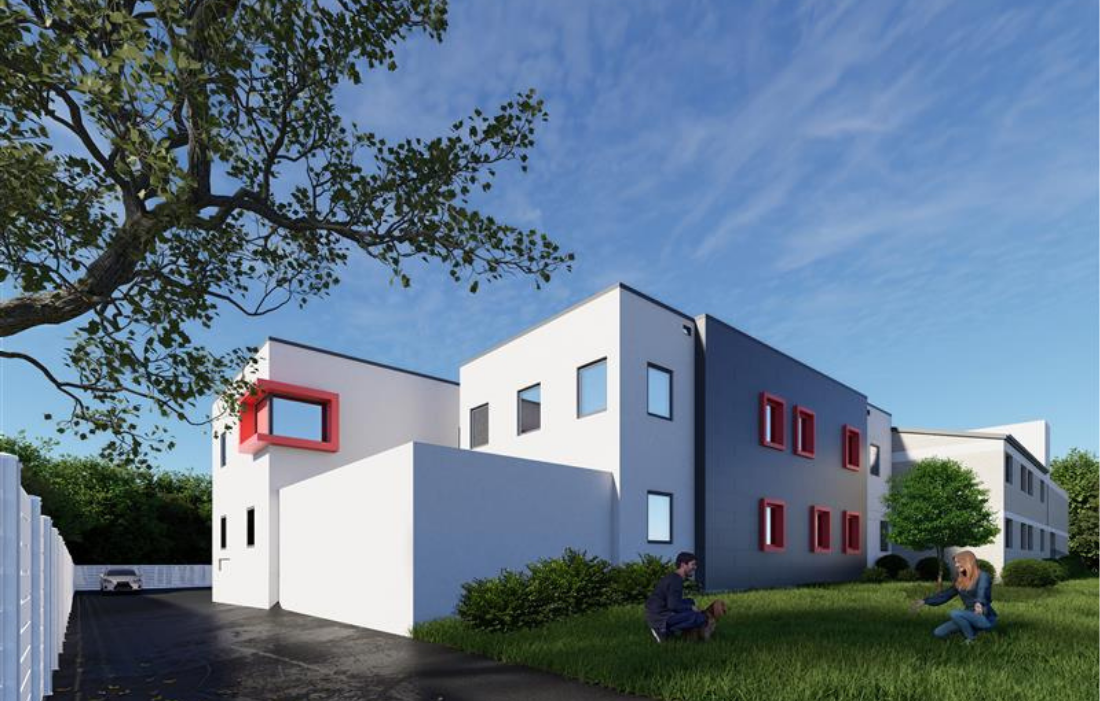
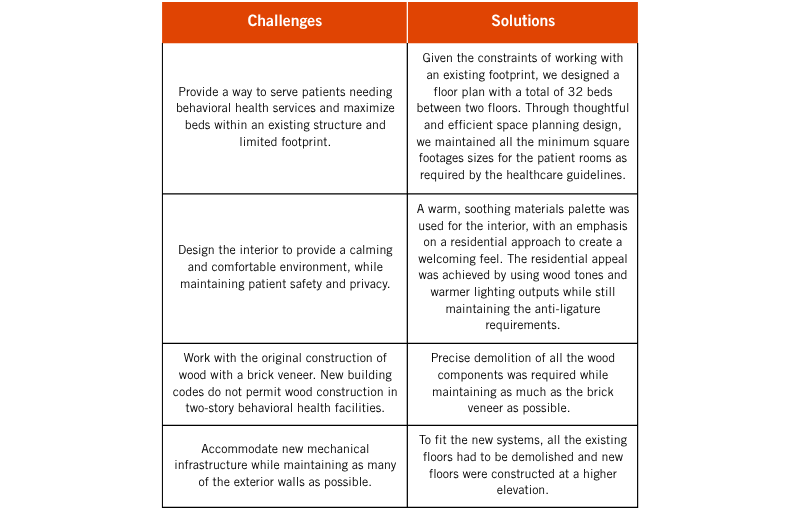
In this project, Ware Malcomb worked on the design of a behavioral health facility focused on adolescent care. The original building, a vacant two-story former senior living facility, was constructed in the 30’s and has undergone various additions in the 70’s and 80’s. Adaptive reuse of such a dated structure brings its own set of challenges, which the design and client teams worked together to creatively solve:
The adaptive reuse of existing structures gives them new life and purpose, addressing key real estate challenges and providing much-needed healthcare services to the industry. In collaboration with clients, our designers are finding creative project solutions and reemphasizing the importance of innovative design to make a healthier and more resilient society.
Ware Malcomb has brought specialized design services to the healthcare industry since the 1980’s. We are committed to providing successful healthcare projects and healing environments. We are dedicated to serving our clients and the patients they serve in the community, ensuring the best possible patient care.
